Why You Can’t Convert Kilos to Feet or Kilometers
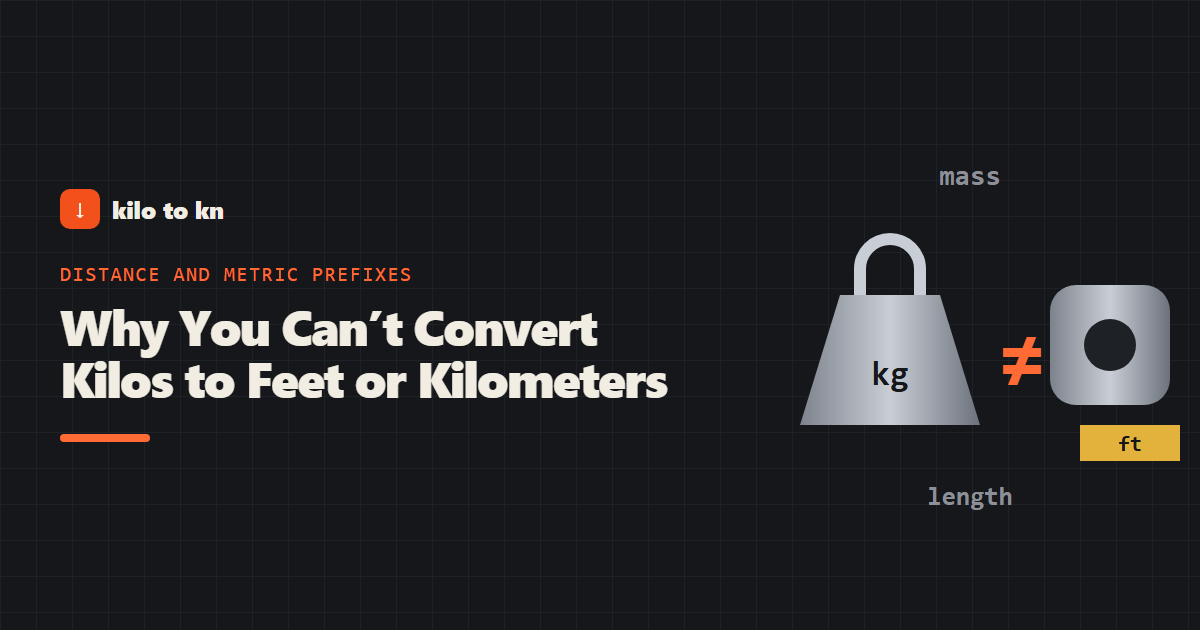
You can’t convert kilos to feet or kilometres: kilograms measure mass, and feet and kilometres measure length. No conversion factor turns a mass into a length.
The question has 2 sensible readings. “Kilo” can mean kilometre, and a mass can turn into a length through a weight-per-metre figure. Both readings are covered below.
Mass and Length Are Different Dimensions
The International System of Units (SI) has 7 base quantities, each with its own base unit:
| Base quantity | SI unit | Symbol |
|---|---|---|
| Length | metre | m |
| Mass | kilogram | kg |
| Time | second | s |
| Electric current | ampere | A |
| Temperature | kelvin | K |
| Amount of substance | mole | mol |
| Luminous intensity | candela | cd |
A conversion works only inside one quantity: kilograms to pounds (both mass), or kilometres to feet (both length). Checking that the dimensions match is called dimensional analysis, and engineers use it to catch errors in formulas.
Exception 1: When “Kilo” Means Kilometre
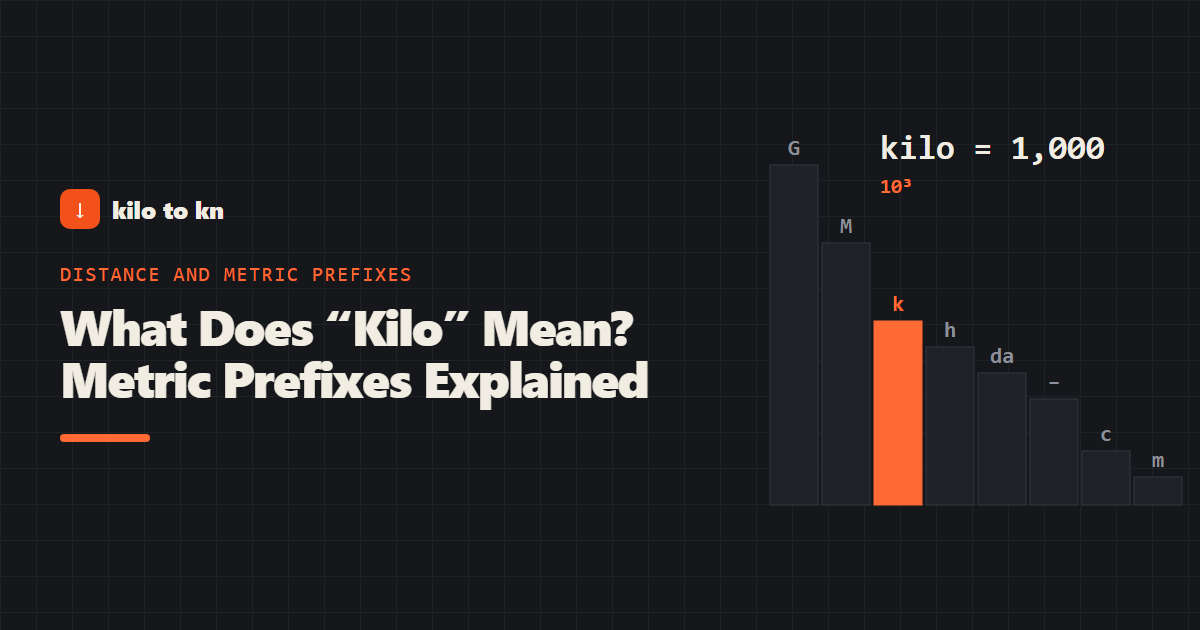
Runners, cyclists and drivers often say “kilo” or “K” for kilometre (km). In that sense, kilos to feet works: 1 km = 3,280.84 feet (ft).
| Distance | Feet | Miles |
|---|---|---|
| 1 km | 3,280.84 ft | 0.62 mi |
| 5 km (5K run) | 16,404 ft | 3.11 mi |
| 10 km (10K run) | 32,808 ft | 6.21 mi |
| 21.0975 km (half marathon) | 69,218 ft | 13.11 mi |
| 42.195 km (marathon) | 138,435 ft | 26.22 mi |
Check the unit symbol before converting: kg is mass, km is distance.
Exception 2: Weight per Metre
A mass turns into a length when you know the weight per unit length, called linear density (kg/m). Engineers, builders and shops use the figure every day:
- Steel rebar: 12 mm rebar weighs 0.888 kg/m, so 100 kg is 112.6 m (369 ft).
- Rope and cable: a datasheet lists kg per 100 m.
- Fabric and paper: paper weight in grams per square metre (gsm) works the same way across an area.
The formula is length = mass ÷ weight per metre. Without the kg/m figure, the conversion has no answer.
3 Quantities Kilos Do Convert To
Kilograms convert to 3 other kinds of quantity with one extra figure:
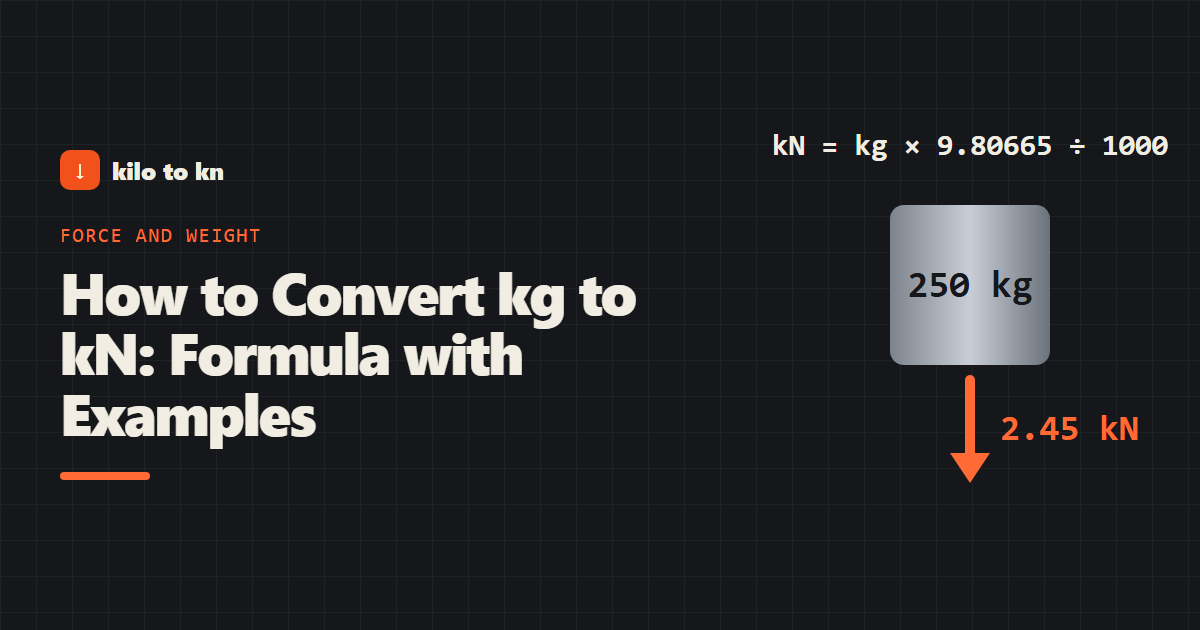
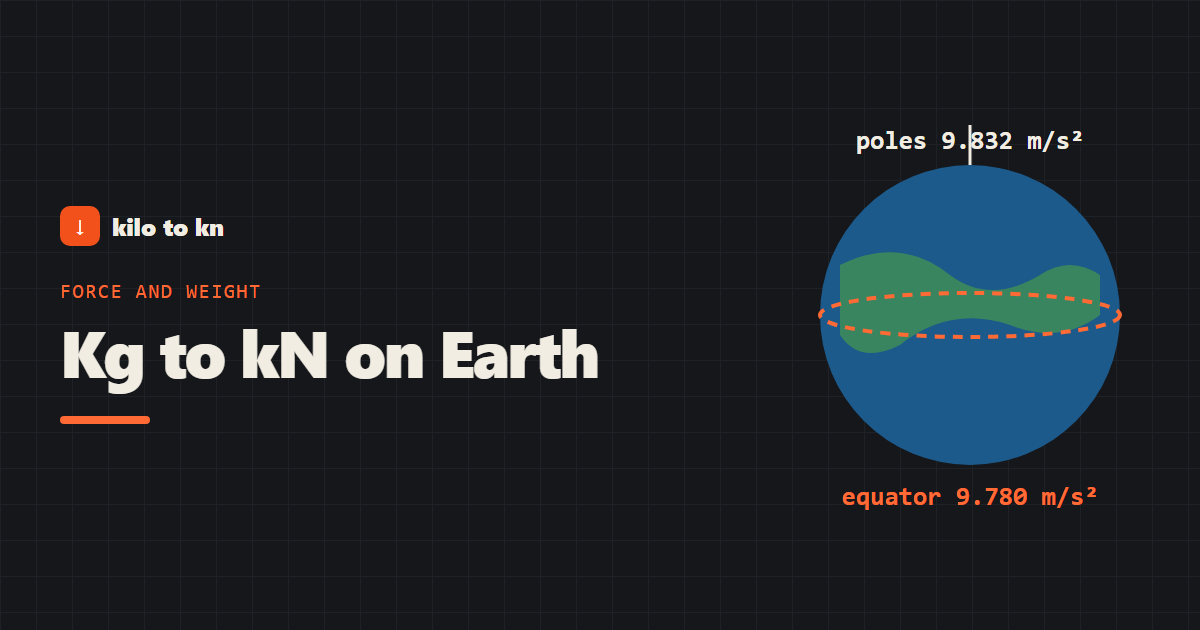
- Force: multiply kg by gravity, 9.80665 m/s², to get newtons (N). 1 kg = 0.0098 kilonewtons (kN).
- Volume: divide kg by density. 1 kg of water = 1 litre (L).
- Length: divide kg by weight per metre, as with rebar.
Each conversion needs the extra figure. Feet and kilometres alone never do.
Questions
How many feet is 1 kilo?
None, if kilo means kilogram. Kilograms measure mass and feet measure length. If kilo means kilometre, 1 km is 3,280.84 ft.
Can you convert kg to km?
No, kg (mass) and km (distance) are different quantities. No conversion factor links them.
How do I find the weight of a length of rope or rebar?
Multiply the length by the weight per metre. 12 mm rebar weighs 0.888 kg/m, so 10 m weighs 8.88 kg.