Blog
12 articles on kilograms, kilonewtons and unit conversion. Each article answers one question first, then shows the numbers.
 Force and weight
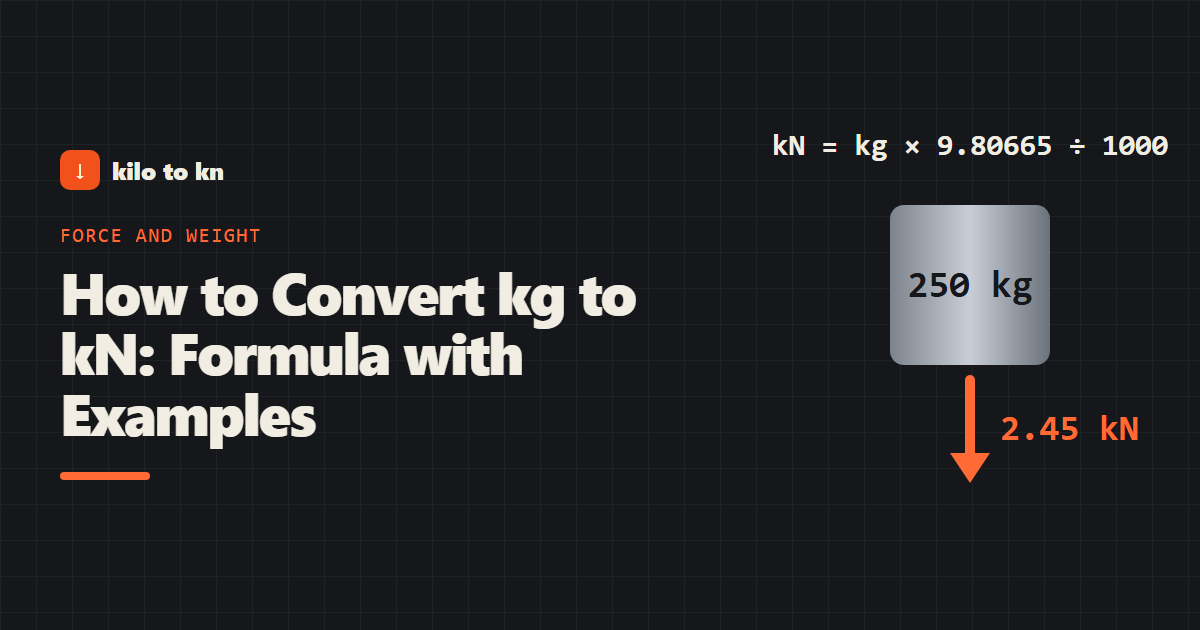
How to Convert kg to kN: Formula with Examples
To convert kg to kN, multiply kilograms by 0.00980665. Learn the formula, 3 steps, 8 worked examples, the reverse kN to kg factor and 3 common mistakes.
 Force and weight
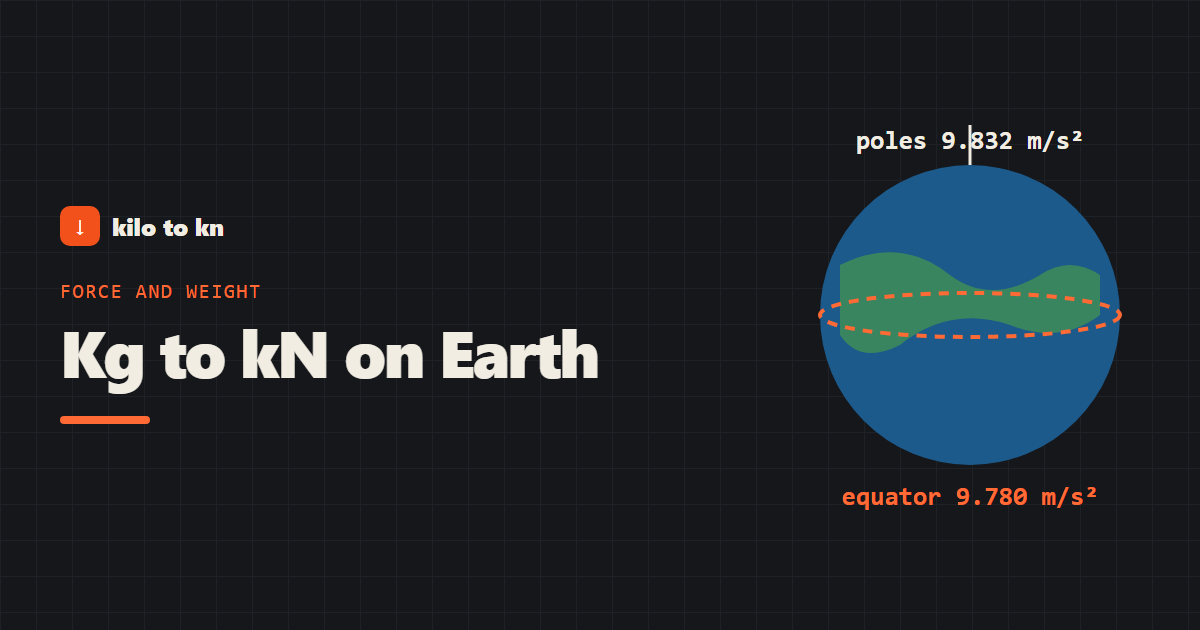
Kg to kN on Earth
On Earth, 1 kg weighs 0.00980665 kN under standard gravity. Real gravity runs from 9.780 to 9.832 m/s², so the same mass weighs up to 0.5% more at the poles.
 Mass and everyday weight
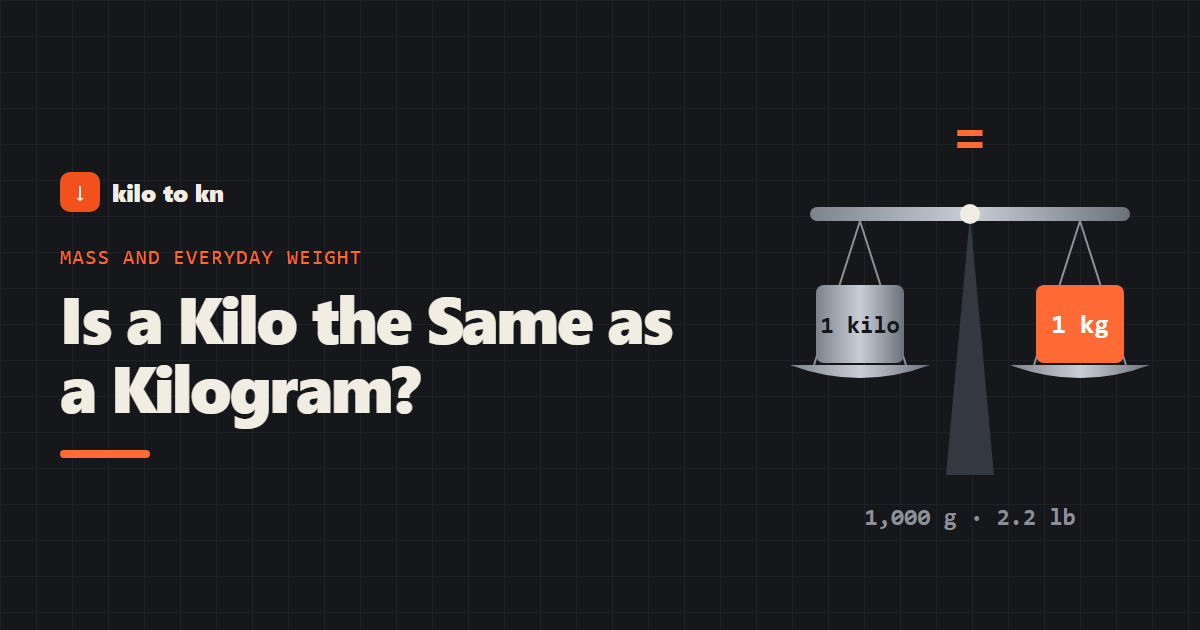
Is a Kilo the Same as a Kilogram?
Yes, a kilo is the same as a kilogram: 1 kilo = 1 kg = 1,000 g = 2.20462 lb. See where the word comes from and when kilo means something other than kg.
 Distance and metric prefixes
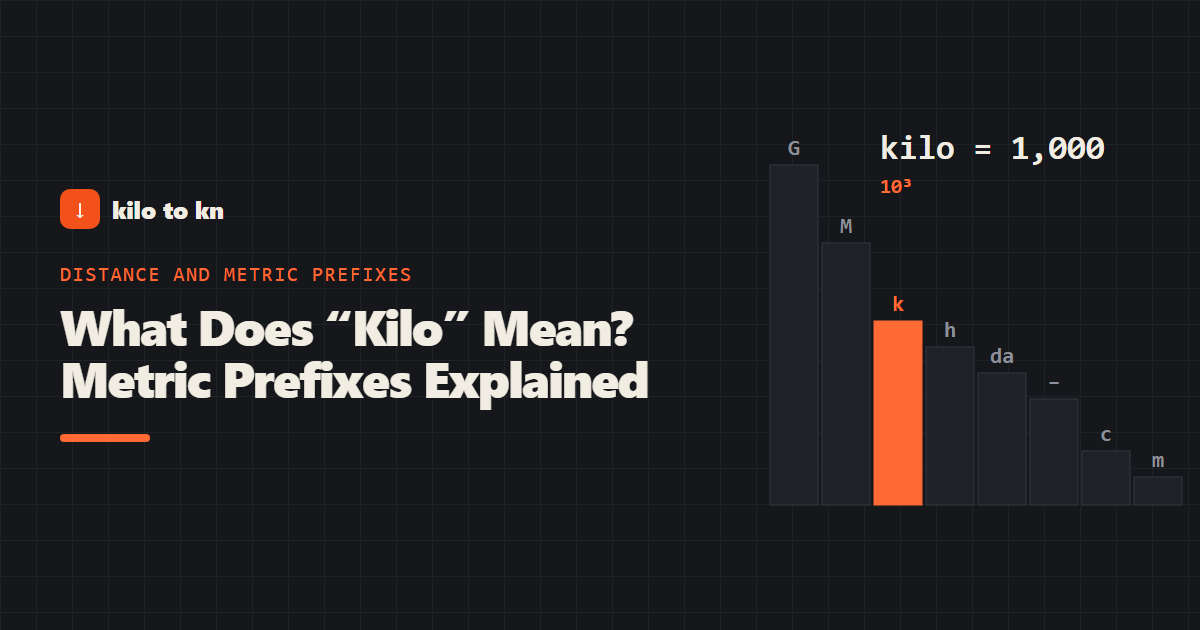
What Does “Kilo” Mean? Metric Prefixes Explained
Kilo means 1,000 (10³). See the 10 most-used metric prefixes from giga to nano, how to write the symbol k, and why a kilobyte is sometimes 1,024 bytes.
 Mass and everyday weight
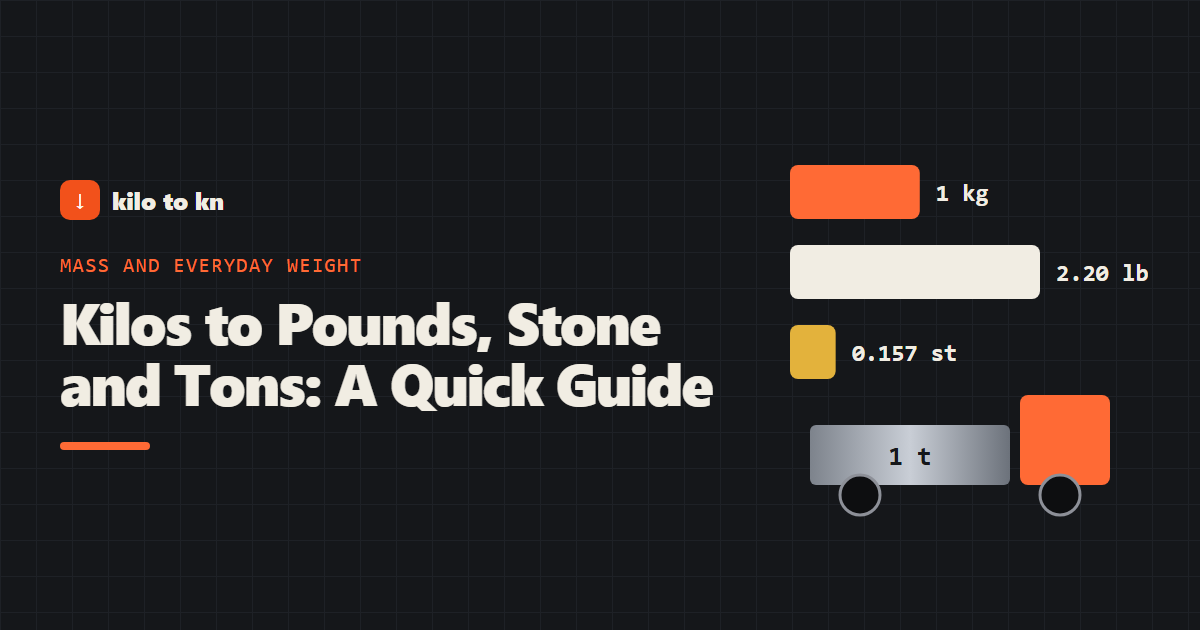
Kilos to Pounds, Stone and Tons: A Quick Guide
1 kilo = 2.20462 pounds, 1 stone = 6.35 kilos and 1 metric ton = 1,000 kilos. Convert kilos to lb, st and tons with charts, examples and a mental-math trick.
 Kitchen and liquids
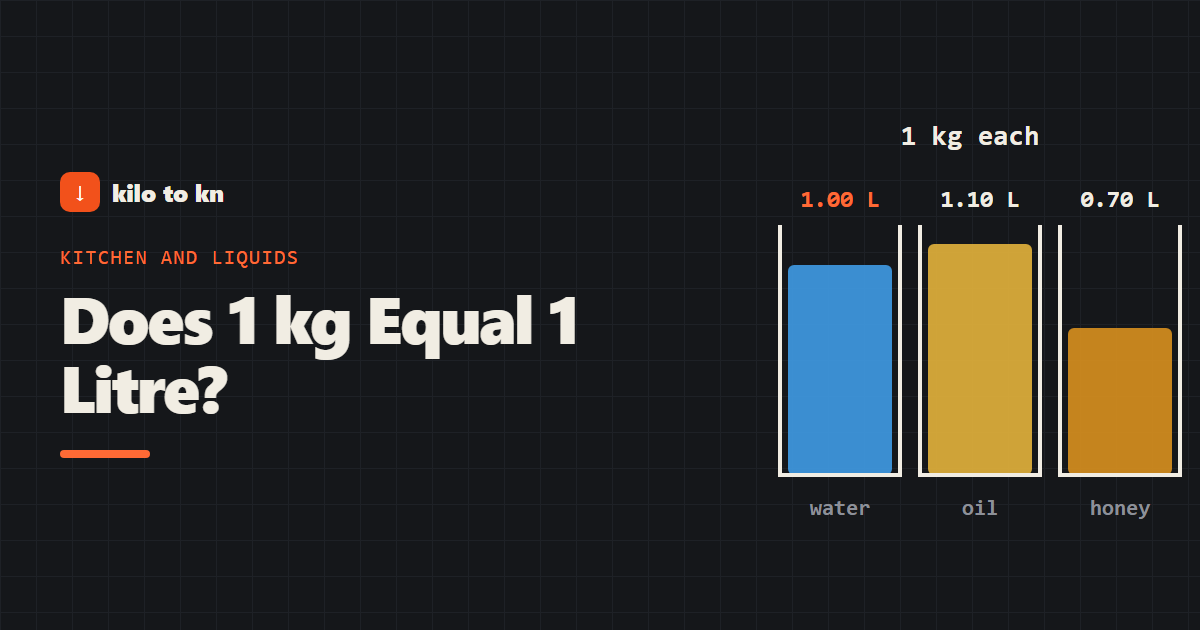
Does 1 kg Equal 1 Litre?
Yes for water: 1 kg of water fills 1 litre at 4 °C. Other liquids differ: 1 kg of milk fills 0.97 L, olive oil 1.10 L and honey 0.70 L. Density decides.