kN vs kn vs Knots: Don’t Mix Up These Units
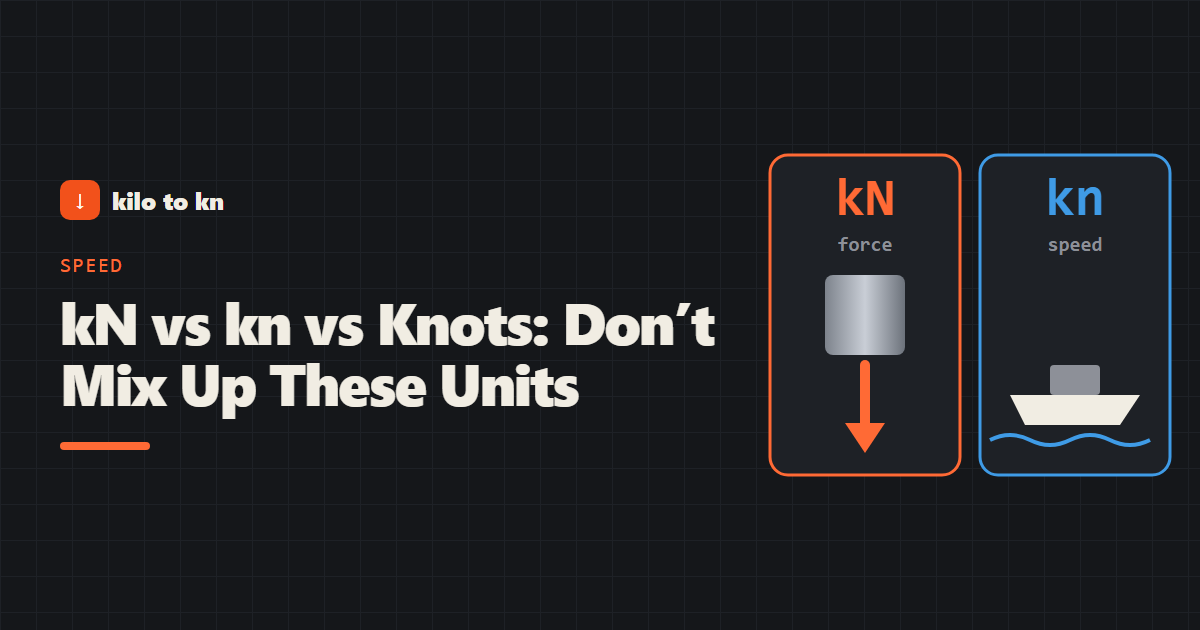
kN is the kilonewton, a force of 1,000 newtons. kn is the knot, a speed of 1 nautical mile per hour (1.852 km/h). The only visible difference is the case of the letter N, and that one letter separates force from speed.
Searches such as “kg to kn” almost always mean kilograms to kilonewtons. A mass never converts to a speed.
kN, kn and Knots Side by Side
| Symbol | Unit | Quantity | Equals |
|---|---|---|---|
| kN | kilonewton | Force | 1,000 N = 224.8 lbf = weight of 101.97 kg |
| kn | knot | Speed | 1.852 km/h = 1.151 mph = 0.514 m/s |
| kt | knot (aviation and weather) | Speed | Same as kn |
| N | newton | Force | 1 kg·m/s² = weight of 102 g |
kN: The Kilonewton
A kilonewton (kN) is 1,000 newtons (N), the SI unit of force. One kN is the weight of 101.97 kg on Earth. Engineers use kN for 5 kinds of figures:
- Crane and sling ratings: a 50 kN sling holds 5.1 t.
- Anchor and bolt loads: a wall anchor rated 4 kN holds 408 kg.
- Climbing gear: a carabiner marked 24 kN is rated for 24,000 N along the spine.
- Structural loads: floor loads in kN/m², for example 2.0 kN/m² for offices.
- Torque: moments in kN·m.
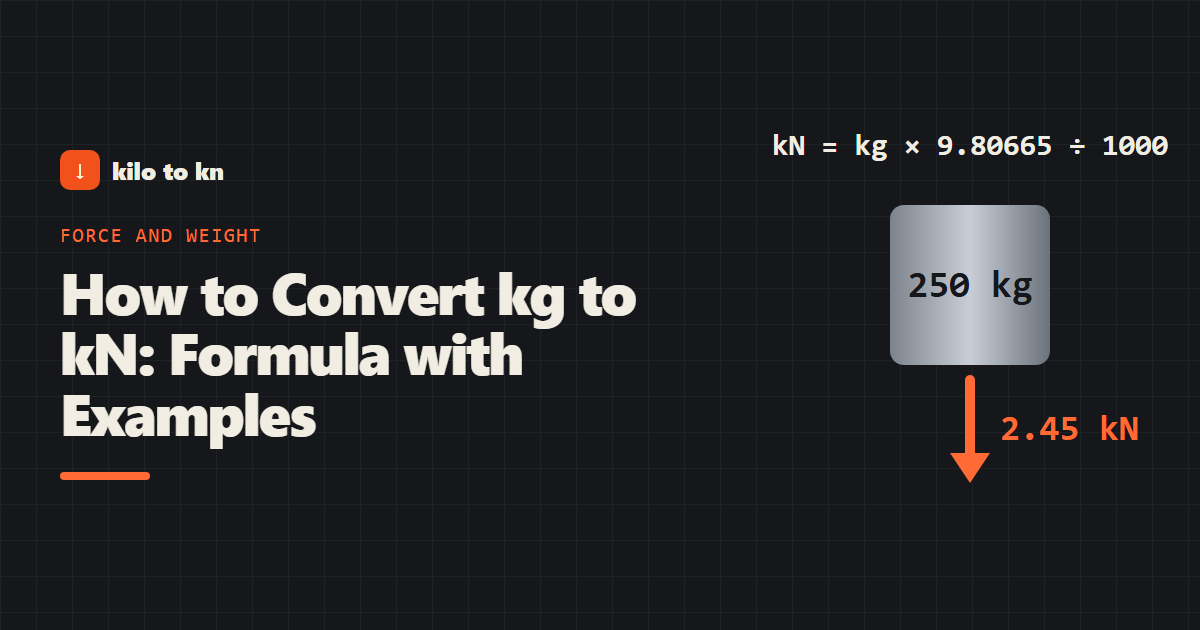
To convert kg to kN, multiply by 0.00980665. 500 kg = 4.90 kN.
kn: The Knot
A knot (kn) is 1 nautical mile per hour. A nautical mile (NM) is exactly 1,852 m, so 1 knot is exactly 1.852 km/h. Ships, aircraft and weather reports use knots.
| Speed | km/h | mph | m/s |
|---|---|---|---|
| 1 kn | 1.852 | 1.15 | 0.51 |
| 10 kn | 18.52 | 11.51 | 5.14 |
| 25 kn (fast ferry) | 46.3 | 28.8 | 12.9 |
| 150 kn (light aircraft) | 277.8 | 172.6 | 77.2 |
| 480 kn (airliner cruise) | 889 | 552 | 247 |
The International Civil Aviation Organization (ICAO) and most weather services write the knot as kt. The symbol kn appears in shipping, physics books and unit standards.
Why One Capital Letter Matters
The SI writing rules make the case of each letter carry meaning:
- Lowercase k is the prefix kilo (1,000). Uppercase K is the kelvin.
- Uppercase N is the newton. SI symbols for units named after people start with a capital: N for Isaac Newton, Pa for Blaise Pascal, W for James Watt.
- Lowercase kn is a single symbol for the knot, not kilo + n.
A load chart that reads “20 kn” contains a typo for 20 kN. A ship log that reads “20 kN” contains a typo for 20 kn.
3 Ways to Avoid Mixing Them Up
- Check the quantity. A load, a rating or a weight is kN. A speed is kn or kt.
- Check the neighbouring units. kN sits next to kg, t and m². Knots sit next to NM, km/h and heading.
- Write the unit name once. “20 kN (kilonewtons)” in the first mention removes doubt in a report.
Questions
Is kN the same as kn?
No, kN is the kilonewton (force) and kn is the knot (speed). The two units measure different quantities.
Can I convert kg to knots?
No, kilograms measure mass and knots measure speed. You can convert kg to kN (force): 1 kg = 0.0098 kN.
Why is the N in kN a capital letter?
The newton is named after Isaac Newton, and SI symbols for units named after people start with a capital letter.